To Eternity is an interactive media installation commemorating the Gwangju Democratization Movement of May 18, 1980. Using real-time body recognition, the system transforms the audience's silhouette into a living mosaic of historical photographs collected from the uprising.
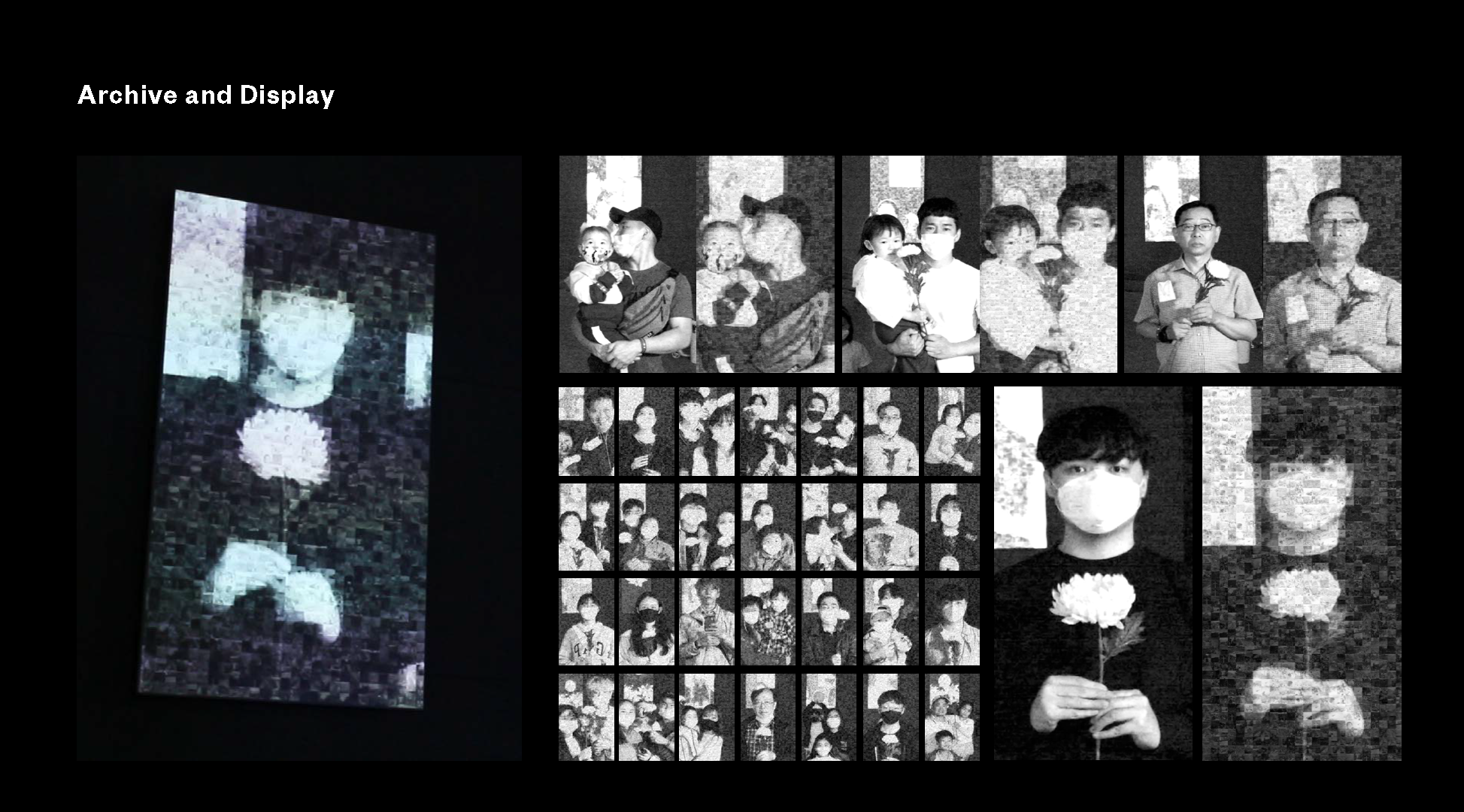
When a participant performs a flower-offering gesture and sustains it for more than five seconds, the system recognizes the motion and triggers an automatic capture, overlaying 300 archival images across the participant's silhouette to create a digital memorial portrait.
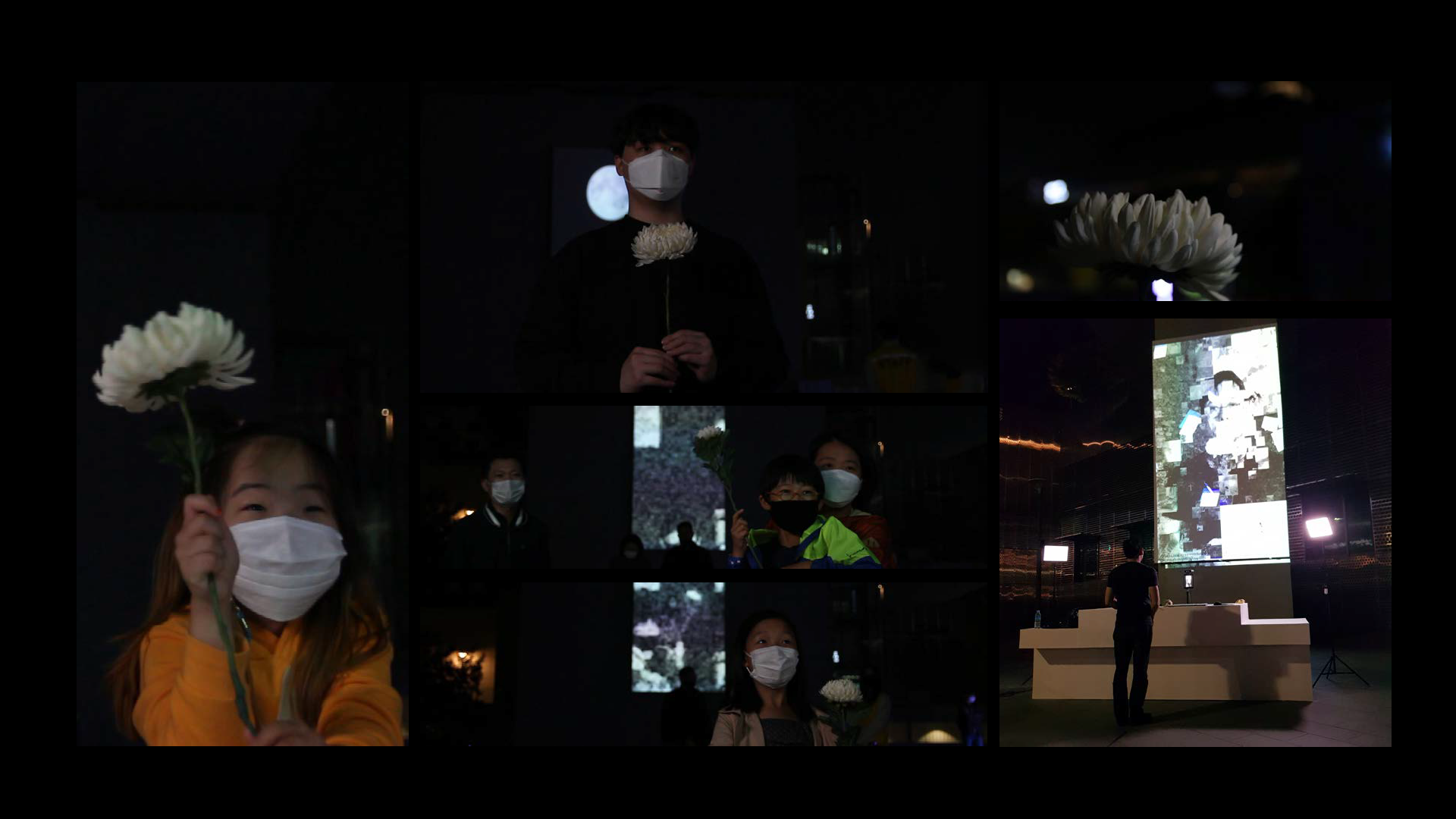
Through this embodied act of remembrance, the work converts silent mourning into a collective ritual, where technology mediates empathy, presence, and history.
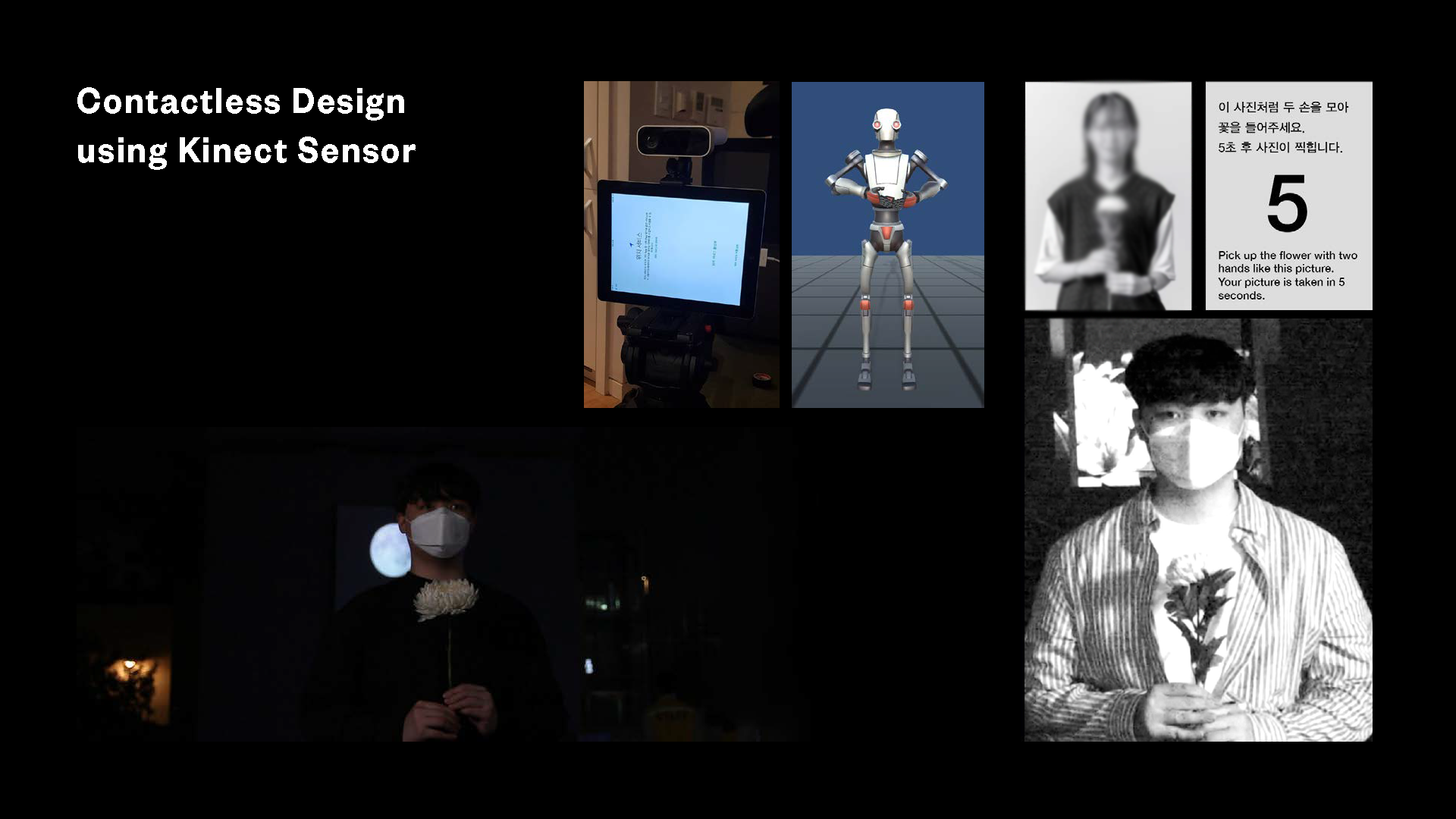
Captured real-time depth and body index maps using Azure Kinect SDK. Extracted joint coordinates to detect upper-body pose patterns.
Defined a "flower offering" gesture via upper-arm and hand position vectors. Pose classified as offering when confidence exceeded 86% for 5 continuous seconds, triggering mosaic generation.
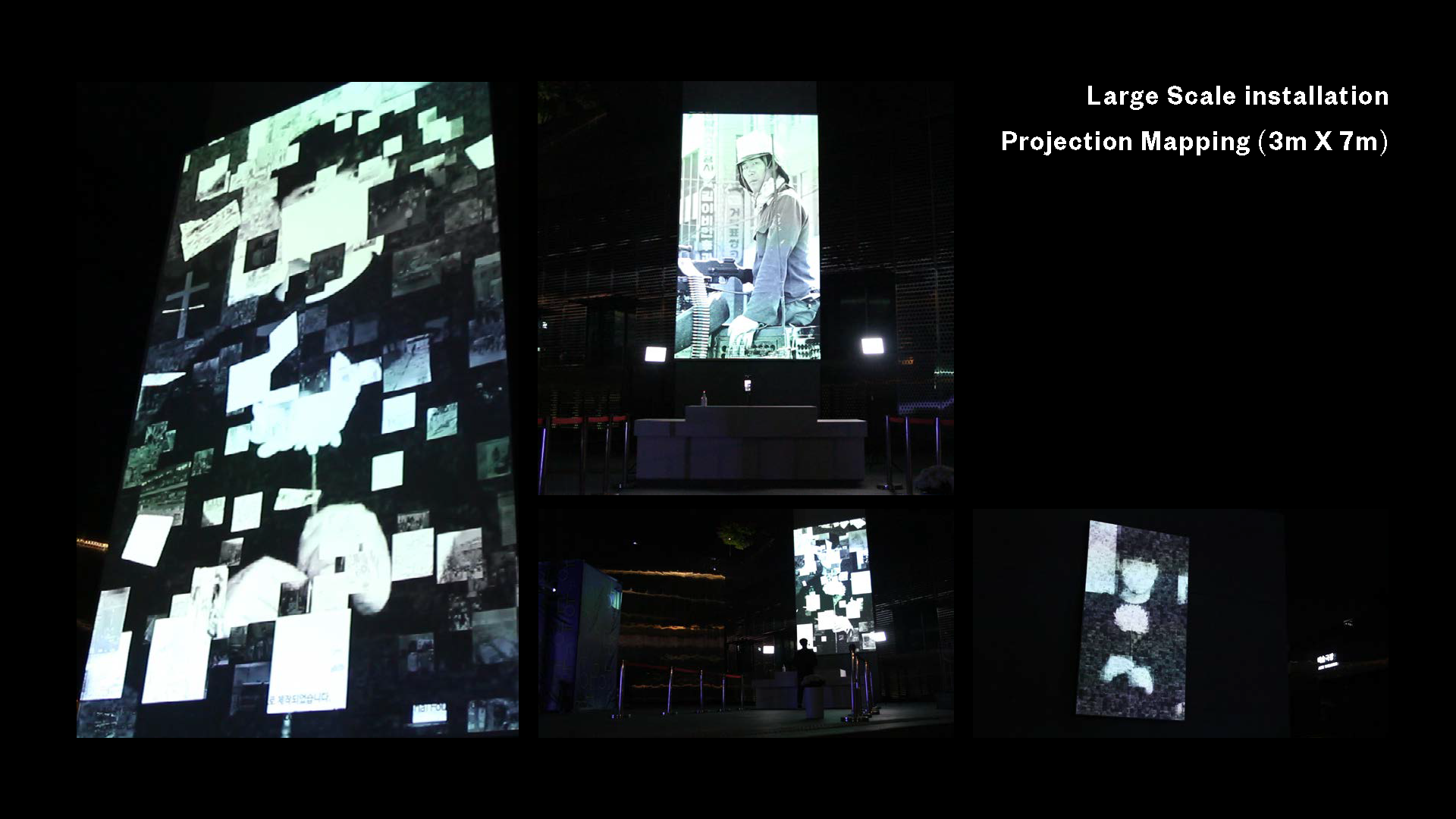
Preprocessed ~300 high-resolution documentary images licensed from participating photojournalists. Custom mosaic algorithm layers archival photos over the live silhouette in real time.
Unity UI controlled the layered composition and screen transitions. ProRes 4444 media with alpha channels preserved transparency and enabled fades to be handled directly inside Unity.
Final composite projected onto a large wall surface, creating a memorial altar visualization that responded dynamically to audience participation.
The project transforms commemoration into participation, exploring how technology can preserve and reinterpret historical empathy. Through gesture, time, and presence, To Eternity bridges personal mourning and collective memory.
By allowing the audience's body to become the medium of remembrance, it redefines memorial experience as a collaborative and living archive — where the act of offering flowers becomes a generative visualization of solidarity and resilience.